
The tradition of Catholic education is diverse and is of immense consequence for all education in the west, Catholic or otherwise. The origins of formal education are inseparable from monasticism in the early Church and her act of civilizing Europe. In addition to preserving and handing on Sacred Scripture, these monks also preserved and developed the Greek and Roman tradition of liberal arts and philosophy. Out of these monasteries and local Cathedral schools, the Church founded the University system, inventing higher education to form her clerics for preaching Theology to medieval Europe. The Counter-Reformation and the high middle ages saw Jesuits innovating school models and starting to standardize. Many other teaching orders and great saints sprung up in the succeeding centuries, leading to a well deserved reputation of reliable excellence in Catholic schools (especially in the U.S.). This reputation of excellence, though, brought with it a tendency of schools to favor a results-driven college-preparatory model in the 20th century. Along-side revolutionary change in secular education, the outsized focus on temporal benefits carried with it the temptation of mission drift: Catholic schools sacrificing their Catholic identity for worldly approval.
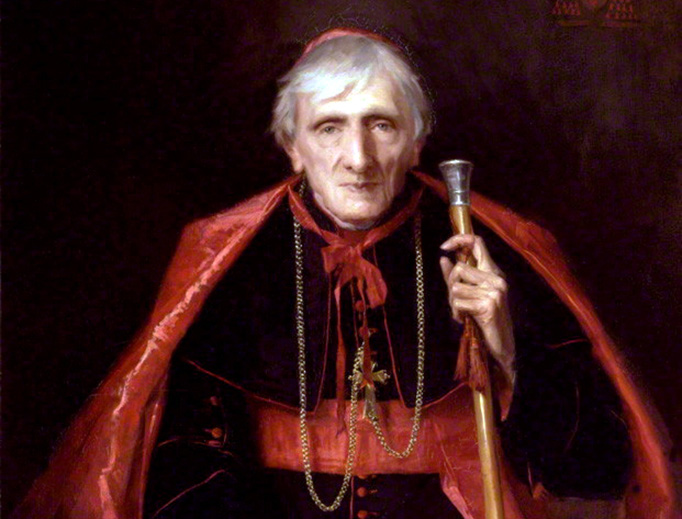
In the 20th and 21st Centuries, we’ve seen a revival of Catholic education by a return to the classical liberal arts model at the roots of the Church’s tradition. This renewal derives inspiration from many sources, but John Henry Cardinal Newman stands out among the rest. Newman codified the Church’s understanding of her own educational tradition and priorities. His articulation of the Church’s initial development and constant practice of forming her members has endured and formed much of the backbone of what Americans are calling “classical liberal arts” education. Many proponents of classical education, especially those brothers and sisters who have yet to cross the Tiber, remain unaware of Newman’s importance in this educational movement. Nonetheless, his influence can hardly be overstated. We have St. John Henry Newman to thank for codifying core principles for which classical and Catholic educators strive in an exciting and on-going renewal.
Integration
A defining characteristic of classical and Catholic education alike is the integration of disciplines. Integrating disciplines requires that faculty be familiar with their colleagues’ courses and that no course or class is ever siloed off from the others as if it were self sufficient. In classical education, there is a conspicuous hesitation to specialize (or at least, to over specialize). Even at the college level, some classical liberal arts colleges offer just one single major, with no opportunity to specialize at the undergraduate level. This integration strikes many as odd and impractical, but John Henry Newman provides an apologia for this approach: truth is one. He puts it this way: “all the sciences come to us as one, that they all relate to one and the same integral subject-matter.” That subject matter is reality itself. Each discipline needs “the support and guarantee of its sister sciences, and giving in turn while it takes.”1 Mathematics, Literature, History, and Theology each offer the student a window through which to view the truth, even if from different angles. They also help and support one another. John Henry Newman’s own conversion to Rome is famous for integrating history and theology. His robust historical study of the Early Church Fathers led him to believe that “to be deep in history is to cease to be Protestant.”2
This same idea inspired John Senior to found the Integrated Humanities Program at the University of Kansas. The result of integrating and humanizing curriculum and instruction—even in a secular educational environment—was an incredible flood of conversions to Catholicism, religious vocations, priests, and bishops. It took less than a decade for three college professors to help usher in a revival of education for both Church and nation. Yet, for all the good and excellence that IHP exemplified, something about the secular environment of the public university seems to have doomed it to destruction.3
At Coeur Du Christ Academy, we believe whole heartedly in the integration of disciplines. Perhaps the most obvious example is that we treat history, literature, and philosophy as one field of study completed in the same period. Students study the history of western civilization and culture together with the literature, poetry, and philosophical thought of the respective period. These are Humanities courses in the most literal sense of the term. The students study humanity in all the most crucial ways that we express our human nature. Approaching the truth from this integrated vantage point is meant to have a humanizing effect on both student and teacher. The study of the humanities makes us more human, it conforms us to what humanity is supposed to be.
Centrality and Import of Theology for all educational disciplines
The most typical posture of teacher, student, parent, and administrator—especially in the context of American industriousness—is to prioritize those courses which have the most empirical evidence behind them. These seem objective and so we tend to think of them as the most reliable. This often leads to an attitude that the physical sciences and mathematics are the most important and reliable disciplines.
Cardinal Newman provides a more Catholic vision in the hierarchy of academic disciplines. Anyone familiar with Pope St. John Paul II’s Ex Corde Ecclesiae will not be surprised to find that Newman, like John Paul, considers Theology to be the highest and most indispensable discipline. Newman builds upon the crucial integration of disciplines, saying, “in order to have possession of truth at all, we must have the whole truth; and no one science, no two sciences, no one family of sciences, nay, not even all secular science, is the whole truth.”4 That whole truth necessarily includes the truths we attain by divine revelation and the teachings of the Church. No legitimate window into truth “can safely be omitted.”5 For Newman then, secular education, omitting theological formation, is an incoherent idea.
Newman offers this vision in even stronger terms, “In a word, Religious Truth is not only a portion, but a condition of general knowledge.” We might consider the image of a jigsaw puzzle. While theology provides an important piece without which the larger image can never be complete, theology also provides the full image that reveals the proper place of each individual piece. It is the reference by which we see the connections between the disciplines. He attests that Catholics “think the omission of any kind of knowledge whatever, human or divine, to be, as far as it goes, not knowledge, but ignorance.” According to Newman, the intentional secularization of education is a self-defeating endeavor. It invalidates the project of education as a whole, and each discipline suffers from disconnection from theology.
My profound and undying gratitude rests in my faculty at Coeur du Christ, each of whom integrate theology into their disciplines and view their subjects as subordinate to theology. We might have a clear notion of how theology can provide benefit to the humanities (especially Moral Theology), but what of Mathematics and the Natural Sciences? We have faculty members who are masters of this integration and subordination. My science and math teachers spend considerable time discussing theology as the chief justification for studying math or science at all, and they tailor those reasons to their specific mathematical or scientific discipline. It is only by seeing creation as good, and therefore beautiful, that mathematics and the natural sciences can have any significance beyond practical application. If creation is both good and intelligible, then math and science are a worthwhile discipline for our study. If creation is both good and intelligible, it only is so because a good and intelligent being holds creation in existence.
Virtue as the purpose of education
“The theological virtues are faith, hope, and charity. The moral virtues are prudence, justice, fortitude, and temperance. The intellectual virtues are art, prudence, understanding, science, and wisdom.”
Importance of forming the imagination
Education, then, seeks the interior integration of students and teachers by way of an integrated course of study, holding Theology as the queen of the sciences, for the purpose of cultivating theological, moral, and intellectual virtues in the souls of students. If the newest doctor of the Church is correct on these points, then he would naturally arrive at the conclusion that schools should place a heavy emphasis on the formation of the imagination, perhaps a heavier or equal weight as is placed on the formation of the intellect. Indeed, this is the conclusion of most classical educators today.
Newman argued that the best way to form behavior (e.g., for virtuous acts) is not merely rational or cognitive. Newman argues that “[intellectual] assent does not lead to action; but the images in which it lives, representing as they do the concrete, have the power of the concrete upon the affections and passions, and by means of these indirectly become operative.”9 The formation of the imagination consists in filling it with vivid images that order the passions toward goodness and beauty, and away from falsehood and evil. Newman echoes Plato’s claim that being educated isn’t reducible to rule following or passing a test, but in the interior ordering of the passions toward the good, such that we think truly, do good, and love beauty. This truth inspired Stratford Caldecott’s statement that “the best way to communicate morality is not through endless dry lists of what should and should not be done, but once again through the imagination—through stories, drama, and living examples.”10
Moral Theology at Coeur du Christ is distinctive within the world of Catholic education. We don’t use a mass produced secondary text that distills the important principles for students. Rather, we offer students the original texts from Aristotle, St. Thomas Aquinas and other doctors of the Church, as well as the Catechism and Scripture. Yet, the use of primary sources is also not the primary distinction. Significantly, Coeur du Christ Saints slowly read Dante Aleghieri’s Purgatorio in concert with Scripture and the Magisterium of the Church. Our students enter into an imaginative world where the vices, virtues, and the paths between are vividly dramatized. We enter into Dante’s imaginative world so that our study can have a real effect in making students and teachers good, so that more than just the intellect is affected. Dante may or may not be an authoritative source for precision in who ends up where in the afterlife, but that question misses the point. We traverse Mt. Purgatory with Dante and Virgil, allowing the imaginative journey to purge us for entry into paradiso. The greatest student compliment I have ever received in my professional career was from a student who took this Moral Theology course and said, “this has helped me to see that sin is ugly.” That affective dimension is the goal. It is where saints are made.
The nature of liberal education as distinct from practical education
Perhaps the most controversial aspect of classical education is that it is decidedly not college and career preparatory. Of course, the goods of university education and professional life need not be neglected, but many secondary schools treat university admissions as the highest possible good. Others prioritize the trades, getting into the workforce to make money. In short, the value of education is primarily measured in the number of dollars a graduate may be able to earn. Our 38th Doctor of the Church would reject this position emphatically.
Newman responds to the pragmatist in each of us, saying,
But education is a higher word; it implies an action upon our mental nature, and the formation of a character; it is something individual and permanent, and is commonly spoken of in connexion with religion and virtue. …and since cultivation of mind is surely worth seeking for its own sake, we are thus brought once more to the conclusion, which the word “Liberal” and the word “Philosophy” have already suggested, that there is a Knowledge, which is desirable, though nothing come of it, as being of itself a treasure, and a sufficient remuneration of years of labour.11
Private schools and universities are expensive. Yet, Cardinal Newman argues that the returns on investment are distinct from anything that can be measured in monetary terms. There is a kind of wisdom that is worth the price-tag of tuition regardless of the professional doors it may open. Such wisdom is the interior ordering of the student. It is being educated, in the highest sense of that term, which is desirable as an ample return on investment.
Every teacher has fielded questions like “is this going to be on the test?” or “how many points is this assignment worth?” or “when am I going to use this in real life?” Many teachers don’t like these questions because they have some awareness of the transcendent value of their discipline, and indeed that’s why they teach it. Newman had this understanding for the whole of education. He is a shining beacon of the kind of attitude that the Catholic Church has taken for the education of her members.
The beautiful thing about classical, Catholic education, though, is that our Lord was right when he taught, “but seek first his kingdom and his righteousness, and all these things shall be yours as well” (Matthew 6:33). Educators who are intentional about forming students in wisdom and virtue according to the pedagogy prescribed by Cardinal Newman often find that temporal excellence comes along with it. In our young life as a school, Coeur du Christ has already seen this to be true, and we are proud of these fruits. Coeur du Christ Saints are going on to fruitful university life at public and private universities. They are well prepared for these environments and are finding success and fulfillment in their studies. We also have graduates entering the military, workforce, and finishing tradeschool. We even have our eyes on a few graduates, watching for holy marriages and priestly vocations. With two graduating classes so far, we are elated at their trajectory and successes.
Now that Pope Leo XIV has named St. John Henry Newman as both Doctor of the Church and co-patron of education, my prayer for the future of education is three-fold. Firstly, there are non-Catholic classical educators doing amazing work in protestant and public-charter school contexts. I pray that they will begin to see the Catholic Church—founded by Jesus Christ, her head—as “the pillar and bulwark” (1 Timothy 3:15) of all the good principles toward which they aspire in their tireless formation of young people. Secondly, I pray that Catholic educators the world-over would join in the renewal of Catholic education. More than merely forming students for worldly excellence, we must form them to be saints! There are wonderful resources for joining this renewal, from the Cardinal Newman Society to the Institute of Catholic Liberal Education, the Augustine Institute, the Boethius Institute, Adeodatus, the Classic Learning Test, and many more. Third, I pray that more Catholic parents will beseech their parochial schools and dioceses to provide the kind of education called for by St. John Henry Newman.
1 “…all the sciences come to us as one, that they all relate to one and the same integral subject-matter, that each separately is more or less an abstraction, wholly true as an hypothesis, but not wholly trustworthy in the concrete, conversant with relations more than with facts, with principles more than with agents, needing the support and guarantee of its sister sciences, and giving in turn while it takes:—from which it follows, that none can safely be omitted, if we would obtain the exactest knowledge possible of things as they are, and that the omission is more or less important, in proportion to the field which each covers, and the depth to which it penetrates, and the order to which it belongs; for its loss is a positive privation of an influence which exerts itself in the correction and completion of the rest.” Newman, Idea of a University, III.6.
2 John Henry Cardinal Newman, An Essay on the Development of Christian Doctrine, Sixth edition (Notre Dame, IN: University of Notre Dame Press, 2015), 7-9.
3 For a wonderful and illuminating treatment of John Senior and the IHP, see Fr. Francis Bethel’s illuminating text, John Senior and the Restoration of Realism.
4 “…in order to have possession of truth at all, we must have the whole truth; and no one science, no two sciences, no one family of sciences, nay, not even all secular science, is the whole truth; that revealed truth enters to a very great extent into the province of science, philosophy, and literature, and that to put it on one side, in compliment to secular science, is simply, under colour of a compliment, to do science a great damage. I do not say that every science will be equally affected by the omission; pure mathematics will not suffer at all; chemistry will suffer less than politics, politics than history, ethics, or metaphysics; still, that the various branches of science are intimately connected with each other, and form one whole, which whole is impaired, and to an extent which it is difficult to limit, by any considerable omission of knowledge, of whatever kind, and that revealed knowledge is very far indeed from an inconsiderable department of knowledge, this I consider undeniable.” Newman, Idea of a University, IV.1.
5 Newman, Idea of a University, III.6.
6 “This being undeniable, it is plain that, when he suggests to the Irish Hierarchy the establishment of a University, his first and chief and direct object is, not science, art, professional skill, literature, the discovery of knowledge, but some benefit or other, to accrue, by means of literature and science, to his own children; not indeed their formation on any narrow or fantastic type, as, for instance, that of an “English Gentleman” may be called, but their exercise and growth in certain habits, moral or intellectual.” Newman, Idea of a University, Preface.
7 C.S. Lewis, The Abolition of Man, 23.
8 See, for example, 1 Corinthians 9:24-27. For a gripping intellectual justification of athletics in Catholic education, see Fr. James Schall, S.J. “On the Seriousness of Sport” in Another Sort of Learning (San Francisco: Ignatius Press, 1988), 218-229.
9 “It appears from what has been said, that, though Real Assent is not intrinsically operative, it accidentally and indirectly affects practice. It is in itself an intellectual act, of which the object is presented to it by the imagination; and though the pure intellect does not lead to action, nor the imagination either, yet the imagination has the means, which pure intellect has not, of stimulating those powers of the mind from which action proceeds. Real Assent then, or Belief, as it may be called, viewed in itself, that is, simply as Assent, does not lead to action; but the images in which it lives, representing as they do the concrete, have the power of the concrete upon the affections and passions, and by means of these indirectly become operative.” Newman, An Essay in Aid of a Grammar of Assent, IV.3.
10 Stratford Caldecott, Beauty in the Word: Rethinking the Foundations of Education, 87.
11 “Moreover, such knowledge is not a mere extrinsic or accidental advantage, which is ours to-day and another’s to-morrow, which may be got up from a book, and easily forgotten again, which we can command or communicate at our pleasure, which we can borrow for the occasion, carry about in our hand, and take into the market; it is an acquired illumination, it is a habit, a personal possession, and an inward endowment. And this is the reason, why it is more correct, as well as more usual, to speak of a University as a place of education, than of instruction, though, when knowledge is concerned, instruction would at first sight have seemed the more appropriate word. We are instructed, for instance, in manual exercises, in the fine and useful arts, in trades, and in ways of business; for these are methods, which have little or no effect upon the mind itself, are contained in rules committed to memory, to tradition, or to use, and bear upon an end external to themselves. But education is a higher word; it implies an action upon our mental nature, and the formation of a character; it is something individual and permanent, and is commonly spoken of in connexion with religion and virtue. When, then, we speak of the communication of Knowledge as being Education, we thereby really imply that that Knowledge is a state or condition of mind; and since cultivation of mind is surely worth seeking for its own sake, we are thus brought once more to the conclusion, which the word “Liberal” and the word “Philosophy” have already suggested, that there is a Knowledge, which is desirable, though nothing come of it, as being of itself a treasure, and a sufficient remuneration of years of labour.” Newman, Idea of a University, V.6.
Article originally published on Mr. Luke Heintschel’s Substack.